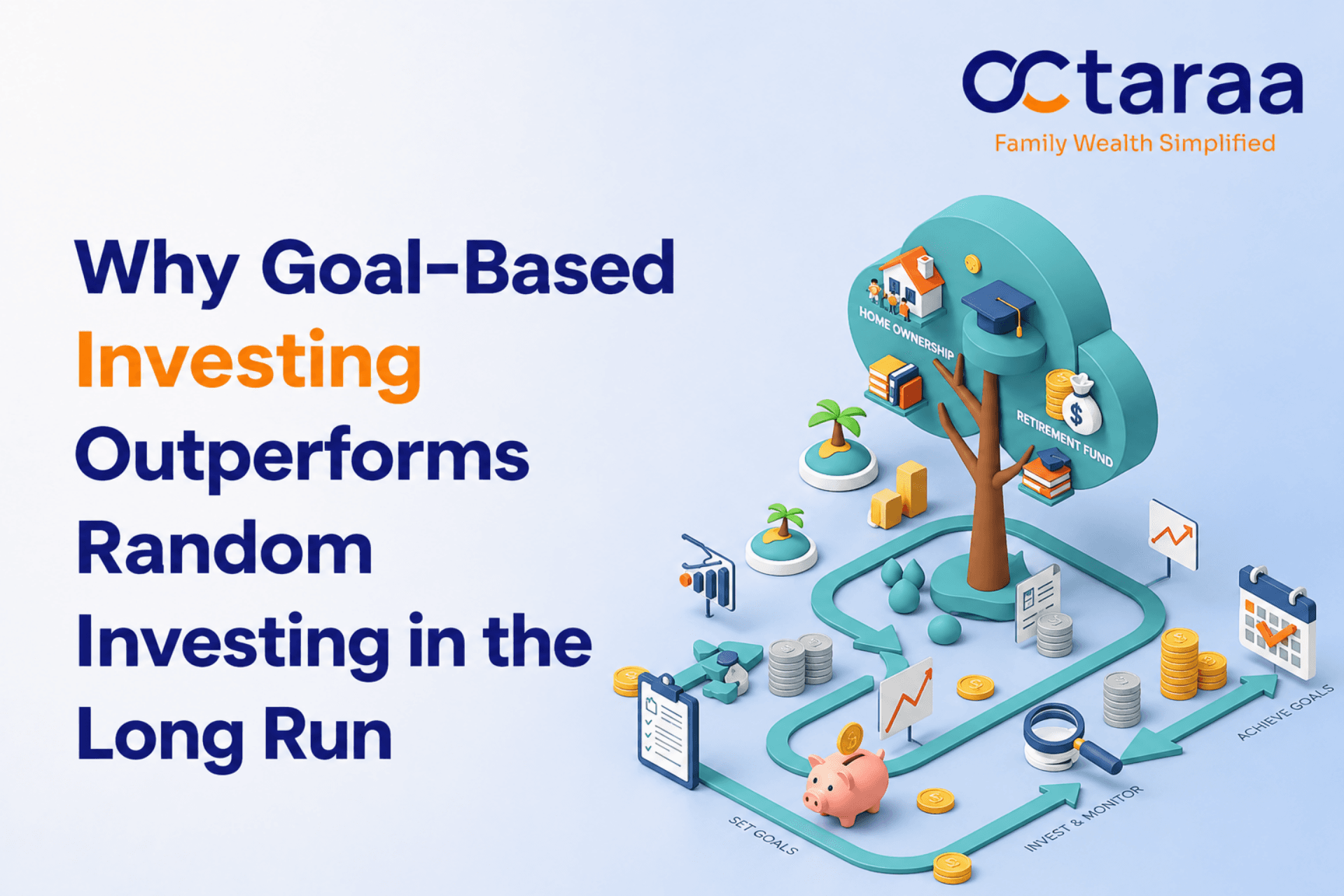
In goal-based investing, investors do not follow the same strategy that involves selecting investments first and then formulating the goals according to the selected financial instruments. Rather, the goal-based investors identify the goal and then make plans to achieve them through investments. It might include making arrangements for your children’s education, saving money for retirement, buying a house, or any other type of goal.
In this way, the process of investments becomes disciplined for investors irrespective of the situation in the market environment.
What Is Goal-Based Investing?
Goal-based investing is a financial planning approach where investments are linked to clearly defined financial goals rather than chosen randomly.
Common financial goals include:
-
Retirement planning
-
Children's education
-
Buying a home
-
Wealth creation
-
Building an emergency fund
-
Major life milestones
Each goal has its own investment timeline, financial requirement, and level of risk, allowing investors to build a portfolio that reflects their priorities.
What Is Random Investing?
Random investing refers to making investment decisions without a structured financial plan.
For example, investors may:
-
Choose investments based on recent returns.
-
Follow market trends.
-
Invest because friends or social media recommend a product.
-
Frequently switch investments.
-
Invest without knowing how much money they actually need.
While some of these investments may perform well, it can be difficult to determine whether they are helping achieve long-term financial objectives.
Why Goal-Based Investing Often Performs Better
1. Every Investment Has a Purpose
When investments are linked to a goal, every financial decision supports a specific outcome.
For example:
-
SIPs for retirement
-
Education investments for children's future
-
Fixed Deposits for short-term goals or emergency savings
Having a clear objective makes investment decisions more meaningful and easier to evaluate.
2. It Encourages Long-Term Thinking
Goal-based investing naturally shifts attention away from short-term market movements.
Instead of asking:
"Which investment is performing best today?"
Investors begin asking:
"Am I on track to achieve my financial goal?"
This change in perspective can reduce emotional decision-making.
3. It Helps Determine How Much to Invest
Many investors know their goals but not the investment required to achieve them.
For example:
-
How much should I invest for retirement?
-
What SIP is needed for my child's education?
-
How much should I save for a home?
Goal-based investing helps answer these questions before selecting investment products.
4. Progress Becomes Easier to Track
Without goals, it can be difficult to know whether investments are successful.
Goal-based investing allows investors to monitor:
-
Progress towards financial goals
-
Remaining investment requirements
-
Time left to achieve objectives
This provides greater financial clarity.
5. It Reduces Emotional Investing
Volatility is something that markets experience automatically.
Those investors who lack a set of goals may become emotionally affected and start buying/selling assets depending on short-term performance results.
Goal-driven investors, however, will most probably concentrate on their long-term goals instead of reacting to short-term volatility.
6. Different Goals Need Different Strategies
Not every financial goal requires the same investment approach.
For example:
| Financial Goal | Typical Time Horizon | Possible Planning Approach |
| Emergency Fund | Immediate | Stable savings options |
| Children's Education | 10–20 Years | Long-term investing |
| Retirement | 20–40 Years | Goal-based investing |
| Home Purchase | 5–10 Years | Balanced planning |
A structured approach helps match investments to the specific requirements of each goal.
Common Mistakes of Random Investing
Investing Without a Plan
Choosing products without understanding why they are needed.
Chasing Market Trends
Making decisions based on short-term performance rather than long-term objectives.
Frequently Switching Investments
Constant changes can interrupt long-term investment discipline.
Ignoring Goal Timelines
Different financial goals require different investment horizons.
Measuring Success Only Through Returns
Investment returns are important, but they should always be evaluated in the context of financial goals.
Goal-Based Investing vs Random Investing
| Factor | Goal-Based Investing | Random Investing |
| Investment Purpose | Linked to specific goals | No defined objective |
| Decision Making | Structured | Often reactive |
| Progress Tracking | Easy to monitor | Difficult to evaluate |
| Emotional Decisions | Generally lower | Often higher |
| Long-Term Planning | Strong focus | Limited focus |
| Portfolio Management | Goal-oriented | Product-oriented |
How Octaraa Helps Families Invest With Purpose
Goal-based investing becomes more meaningful when families understand not just where their money is going, but why it is being invested and what level of risk is appropriate for the goal. A retirement goal with a 25-year horizon may allow a different investment approach from a child's education goal that is only a few years away.
Octaraa helps families bring goals, investment requirements, risk, and portfolio decisions together rather than looking at each investment in isolation.
Start With the Goal, Not the Investment
Choosing an investment first and finding a purpose for it later can lead to an unstructured portfolio. A better approach is to define the financial objective, estimate how much may be required, and then consider an investment approach that fits the goal's timeline and risk requirements.
With Goal Planning, families can create objectives such as retirement, children's education, wealth creation, buying a house, or building an emergency fund. Connecting investments to specific goals also makes it easier to understand whether the level of risk being taken is appropriate for the time available.
Turn Your Goals Into a Financial Plan: https://octaraa.com/goals
Know the Numbers Behind Your Goal
Before deciding how much to invest, it helps to understand how much the goal may actually cost in the future. Inflation, investment duration, expected returns, and the amount invested regularly can all influence the amount required.
Octaraa's Financial Calculators help families explore these numbers and understand how different assumptions can affect their investment requirements. This allows investors to look at the relationship between time, investment amount, potential returns, and financial goals rather than investing based on an arbitrary amount.
Know the Numbers Behind Your Goals: https://octaraa.com/calculators
Check Whether Your Portfolio Is Still Serving the Goal
Creating a goal is only the beginning. Over time, market movements can change portfolio allocation, while changes in income, responsibilities, or timelines can change the level of risk that is appropriate.
Octaraa's Free Portfolio Review helps families evaluate whether their existing investments remain aligned with their financial goals, diversification, asset allocation, risk exposure, and investment timeline. This is particularly useful when an investor wants to understand whether the portfolio is taking an appropriate level of risk to pursue its intended objective.
See If Your Portfolio Is Still on Track: https://octaraa.com/portfolio-review
Understand Risk Before Choosing Your Investment Approach
Different financial goals can have different risk requirements, and every investor has a different ability to tolerate market fluctuations. Taking more risk simply because an investment has higher return potential does not necessarily make it suitable for every investor or every goal.
Octaraa's Risk Appetite Assessment helps investors understand their comfort with investment risk. This can provide greater context when considering how much market fluctuation they may be able to tolerate while working towards their financial objectives.
Know How Much Risk Fits You: https://octaraa.com/risk-appetite
Keep Short-Term Needs Separate From Long-Term Investments
A goal-based portfolio should also account for money that may be needed in the near term. If an emergency occurs, families should ideally have a separate financial cushion rather than being forced to withdraw long-term investments during an unfavourable market period.
Octaraa's Fixed Deposit options allow families to compare and book FDs digitally. These can be considered for stability-focused savings needs, particularly when the priority is capital preservation and accessibility rather than pursuing higher market-linked returns.
Find an FD That Fits Your Plan: https://octaraa.com/fixed-deposits
Use Financial Knowledge to Make Better Goal-Based Decisions
Goal-based investing is not simply about calculating a target amount. Families also need to understand concepts such as risk and return, compounding, inflation, diversification, asset allocation, and investment timelines to make more informed decisions.
Octaraa's financial literacy resources help simplify these concepts, while Samaira AI can help users ask questions and understand financial concepts in simple language. Whether someone wants to understand why higher return potential can involve higher risk or how compounding affects a long-term goal, Samaira AI can make these concepts easier to understand.
The aim is not to tell families what investment to choose. It is to help them understand the financial concepts behind their decisions so they can approach their goals with greater clarity.
Why This Matters in 2026
With all these possibilities open to them, many people feel obliged to always be looking out for their next good idea. Yet long-term financial success may have less to do with finding the best investment than with knowing what your financial direction is.
Those families that invest with well-defined objectives, keep track of how they are doing, and keep their investments in line with their financial objectives tend to be well equipped for staying disciplined despite shifting markets.
The Bigger Picture
An investment without an objective is similar to traveling without a destination. Though each individual investment may do well, it will not always be easy to determine whether your investments are taking you to where you want to go.
Investing based on a goal gives a purpose, structure, and measurement to your success. It enables families to concentrate on their long-term goals, make informed choices, and adjust their investments in case something happens.
Instead of saying, "What investment should I make?", one may ask, "What financial goal am I trying to accomplish?"
The answer to this question will become the basis for a more successful investment experience.
Frequently Asked Questions (FAQs)
What is goal-based investing?
Goal-based investing is an investment strategy where the investor's investments are based on his/her financial goals like retirement, kids' education, etc.
Why is goal-based investing superior to random investing?
This is because of several reasons like having clear goals, being able to measure your progress, avoiding emotional investment, etc.
Is it possible to have more than one financial goal?
Yes. In many cases, families aim to retire while saving money for their kids' education at the same time.
How often should you be reviewing your financial goals?
Your financial goals should be reviewed from time to time or when any major life or financial change occurs.
How does Octaraa support your goal-based investing?
Octaraa can be used for goal-based investing in many ways like goal planning, financial calculators, risk appetite assessment, free portfolio review, fixed deposit services, education articles, and Samaira AI.