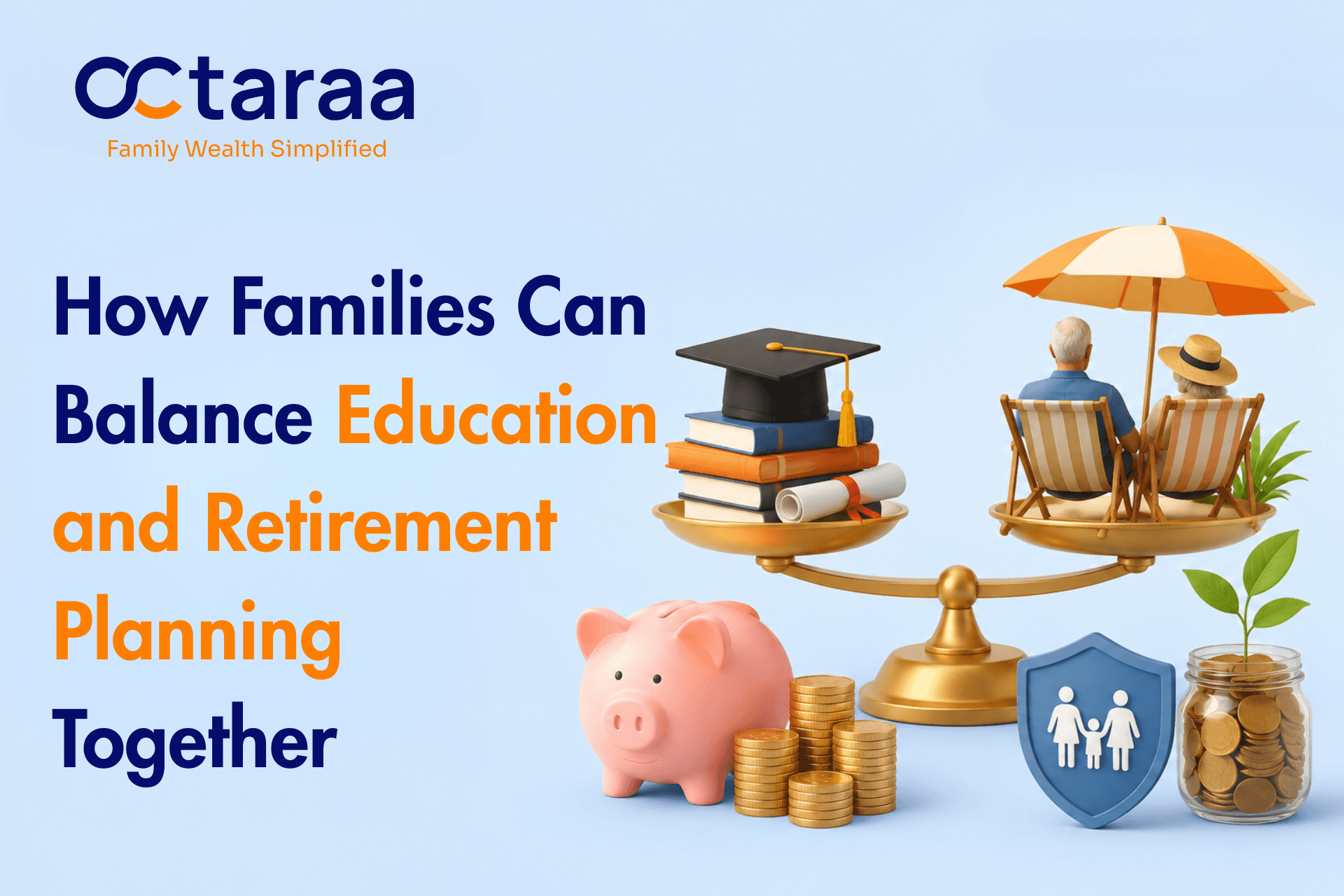
When families begin financial planning, two goals often rise to the top: funding their children's education and preparing for retirement. Both are important, both require long-term planning, and both can have a significant impact on a family's financial and personal future.
However, many families struggle with a common question:
Should you prioritize your child's education or your retirement?
The answer is never straightforward, but understanding the differences between these goals and finding clarity on what works for you as a family can help you make more informed financial decisions.
Why This Decision Matters
Education costs in India continue to rise due to increasing tuition fees, higher living expenses, and growing demand for quality education. At the same time, longer life expectancy means individuals may spend 20–30 years or more in retirement.
Without proper planning, families may find themselves underprepared for one goal while focusing heavily on the other.
Understanding Education Planning
Education planning involves creating a financial strategy to fund future education expenses such as:
-
School fees
-
College tuition
-
Professional courses
-
International education
-
Accommodation and living expenses
-
Study materials and technology costs
Education goals are usually time-bound. Parents often know approximately when funds will be required, making it easier to estimate future costs and create a plan accordingly.
Benefits of Education Planning
-
Helps Prepare for Rising Education Costs
Education expenses tend to increase over time due to factors such as tuition fee hikes, infrastructure development, and technology investments. Planning early can help families prepare for these future costs more effectively.
-
Reduces Dependence on Education Loans
Building a dedicated education fund over time may reduce the need to rely heavily on education loans, helping families avoid future repayment obligations and interest costs.
-
Creates Financial Certainty
Having a structured education plan can provide greater clarity about future funding requirements and help families work toward their education goals with more confidence.
-
Supports Children's Future Opportunities
Adequate financial preparation can help children pursue educational opportunities that align with their interests and aspirations without being limited by financial constraints.
-
Encourages Disciplined Investing
Education planning often involves setting a long-term goal and investing regularly toward it, helping families develop consistent saving and investing habits over time.
Calculate Education Expenses Here.
Understanding Retirement Planning
Retirement planning focuses on building sufficient wealth to maintain financial independence after regular income stops. Just as parents spend years working hard to make their children financially independent and capable of pursuing their goals, it is equally important to ensure they remain financially independent during retirement and do not have to rely on others for their day-to-day needs and lifestyle expenses.
Retirement expenses may include:
-
Daily living costs
-
Healthcare expenses
-
Travel and lifestyle goals
-
Inflation-adjusted future expenses
-
Emergency requirements
Unlike education expenses, retirement can last several decades, making it one of the largest financial goals many families will ever face.
Benefits of Retirement Planning
-
Supports Long-Term Financial Independence
Retirement planning helps build a dedicated corpus that can support your expenses after you stop earning a regular income, allowing you to maintain financial independence throughout your retirement years.
-
Reduces Dependence on Family Members
A well-planned retirement fund can help individuals meet their financial needs independently, reducing the likelihood of relying on children or other family members for ongoing financial support.
-
Helps Manage Rising Healthcare Costs
Healthcare expenses often increase with age. Planning for retirement can help families prepare for future medical and healthcare needs without significantly impacting their financial stability.
-
Provides Financial Security During Retirement Years
Having a retirement corpus can provide greater financial confidence by helping cover everyday expenses, emergencies, and unexpected costs during retirement.
-
Allows Greater Flexibility in Lifestyle Choices
Financial preparedness can give retirees more freedom to pursue hobbies, travel, spend time with family, or enjoy the lifestyle they envision without being constrained by financial concerns.
Visit Calculator Here: calculator
Education vs Retirement: Key Differences
Factor |
Education Planning |
Retirement Planning |
Goal Duration |
Usually 10–20 years |
Often 25–40 years |
Timeline |
Fixed |
Flexible but long-term |
Funding Alternatives |
Education loans available |
No retirement loans available |
Inflation Impact |
Education costs often rise faster than general inflation, increasing future funding requirements. |
Inflation can reduce purchasing power over a long retirement period, making a larger retirement corpus necessary. |
Financial Impact |
Significant |
Potentially lifelong |
Priority Level |
Important |
Critical |
One important distinction is that students may have access to education loans, scholarships, or financial aid. Retirement, however, generally has no equivalent funding option.
Should Retirement Come Before Education?
Financial planners often suggest that retirement planning should not be neglected while planning for children's education.
The reason is simple:
Children may have multiple ways to finance education, but individuals cannot borrow to fund retirement.
This does not mean families should ignore education planning. Instead, both goals should be planned together in a balanced manner.
A strong retirement foundation can also prevent parents from becoming financially dependent on their children later in life.
How Families Can Balance Both Goals
Start Early
The earlier planning begins, the more time investments have to grow through compounding.
Define Both Goals Separately
Create dedicated plans for:
-
Education goals
-
Retirement goals
Avoid combining funds meant for different purposes.
Use Financial Calculators
Calculators can help estimate:
-
Future education costs
-
Retirement corpus requirements
-
Monthly investment needs
-
Impact of delayed investing
Review Plans Regularly
Income, expenses, inflation, and family priorities change over time. A financial plan that was suitable a few years ago may not fully reflect your current situation or future goals. Regular reviews help ensure that both education and retirement plans remain aligned with changing needs, timelines, and financial objectives. In addition, periodic portfolio reviews can help families evaluate whether their investments continue to support their goals, risk comfort, and time horizon. Reviewing your portfolio regularly can also help identify opportunities to rebalance investments and stay on track toward long-term financial goals. Learn more about Octaraa's Portfolio Review feature here: Portfolio Review.
Common Mistakes Families Make
Prioritizing Only Education
Some parents invest heavily for their children's education while neglecting retirement planning altogether.
Delaying Retirement Investments
Waiting too long to start retirement planning can significantly increase the amount required later.
Ignoring Inflation
Both education and retirement costs are affected by inflation and should be planned accordingly.
Not Setting Clear Goals
Investing without a defined objective often makes tracking progress more difficult.
How Octaraa Supports Education and Retirement Planning
Octaraa helps families approach education and retirement planning in a structured and goal-oriented way through a combination of planning tools, calculators, financial literacy resources, and goal tracking features.
Goal Planning
Octaraa's Goal Planning feature helps families define long-term financial objectives such as children's education, retirement, wealth creation, and other important life milestones. Once goals are created, families can track their progress and make adjustments as priorities evolve.
Learn more: Goal Planning
Financial Calculators
Octaraa offers a range of financial calculators that help families estimate future costs, investment requirements, and savings targets. These calculators can support more informed decision-making before setting financial goals.
Explore calculators: Financial Calculators
Future Fees Prediction Calculator
Education costs can rise significantly over time. Octaraa's Future Fees Prediction Calculator helps families estimate how school, college, or higher education expenses may increase in the future, making it easier to plan ahead.
Try the calculator: Future Fees Prediction Calculator
Retirement Calculator
The Retirement Calculator helps families estimate the retirement corpus they may need based on their expected retirement age, expenses, and future financial requirements.
Try the calculator: Retirement Calculator
Fixed Deposits and Emergency Fund Planning
Building an emergency fund is an important part of financial planning. Many families use Fixed Deposits as a stable savings option for emergency reserves. Having a dedicated emergency fund can help prevent withdrawals from education or retirement savings during unexpected situations such as medical emergencies, job changes, or urgent expenses.
Explore Fixed Deposits: Fixed Deposits
Portfolio Review
As family circumstances, income, and financial goals change, investments may need periodic review. Octaraa's Portfolio Review feature helps families evaluate whether their investments remain aligned with their long-term education and retirement goals.
Learn more: Portfolio Review
Family-Focused Financial Planning
Octaraa is designed around family financial goals, helping users plan for education, retirement, wealth creation, and other important milestones through a structured planning approach.
Read more: Family Financial Planning
Financial Literacy Resources
Understanding financial concepts is an important part of making informed decisions. Octaraa provides educational content on topics such as goal planning, investing, retirement planning, Fixed Deposits, SIPs, inflation, and wealth creation.
Related articles:
-
Saving vs Investing
-
SIP vs FD: Which Is Better for Family Goals?
-
How Much Retirement Corpus Do You Need in India in 2026?
-
Benefits of Education Planning
-
The Cost of Delaying Investments
Samaira AI (Coming Soon)
Samaira AI is being developed to help users understand financial concepts and answer financial questions in a simple and accessible manner. It is intended to support financial learning and literacy for families.
Coming Soon: Samaira AI
Final Thoughts
Education planning and retirement planning are not competing goals they are complementary parts of a strong financial plan for all families.
While supporting children's education is an important responsibility, maintaining financial independence during retirement is equally critical. Families that plan for both goals early, invest consistently, and review their progress regularly are often better positioned to achieve long-term financial security.
Frequently Asked Questions (FAQs)
Which is more important: education planning or retirement planning?
Both education planning and retirement planning are important components of a family's financial plan. Education planning can help prepare for future learning opportunities and rising education costs, while retirement planning helps support financial independence later in life. Rather than choosing one over the other, families may benefit from creating a balanced plan that addresses both goals based on their timelines, priorities, and financial circumstances.
Can I plan for both goals at the same time?
Yes. Goal-based planning and disciplined investing can help families work towards both education and retirement objectives simultaneously.
Why should retirement planning start early?
Starting early provides more time for investments to grow through compounding and can reduce the amount required to be invested later.
How can I estimate future education costs?
Families can use education planning calculators and future fee prediction tools to estimate how education expenses may grow over time.
How often should financial goals be reviewed?
Most families should review their financial goals at least annually or whenever major life changes occur.